🚀 We're Hiring: PHP Developer in Bhubaneswar (Full-Time Opening)
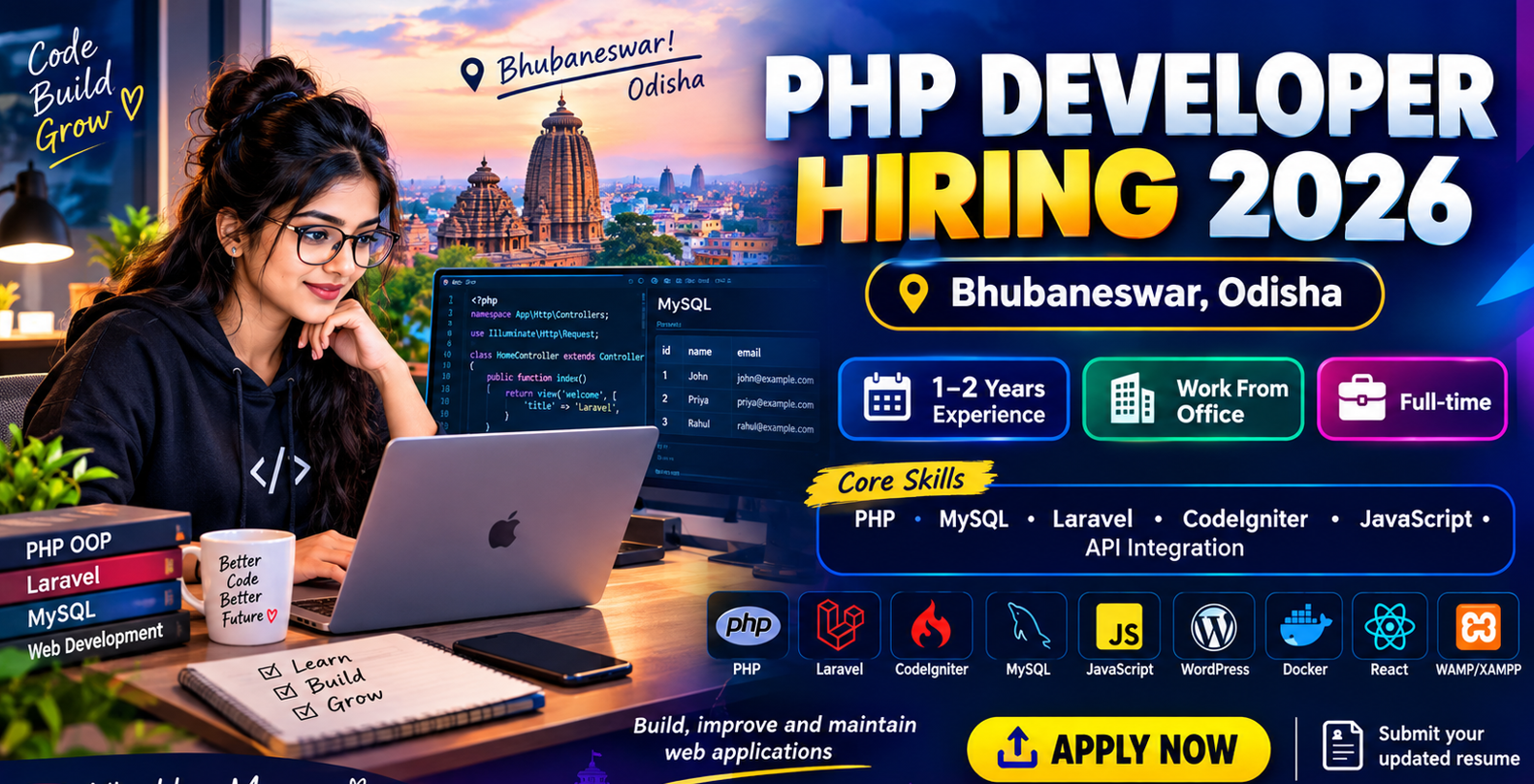
Are you an agile backend engineer looking to design scalable web architectures, optimize relational databases, and build next-generation applications? A premier technological software development agency is actively searching for a talented, logical, and driven PHP Developer to join its expanding in-house engineering division on-site in Bhubaneswar, Odisha. This full-time career opportunity is specifically designed for developers with 1 to 2 years of professional industry experience who want to solve complex programming challenges, work on live enterprise applications, and learn alongside seasoned tech leads.
Hiring for Indatasys Private limited.
💼 Position Overview:
• Role: PHP Developer / Backend Engineer
• Experience Required: 1 - 2 Years of professional web development experience
• Job Location: Bhubaneswar, Odisha (Complete On-Site / Work From Office)
• Employment Type: Full-Time, Permanent
• Salary : 3-6 LPA
⚙️ Core Roles & Responsibilities:
As a Junior to Mid-Level PHP Developer, your daily technical and collaborative tasks will include:
• Designing, coding, testing, and maintaining secure, clean, and highly scalable server-side logical modules using PHP.
• Implementing robust architectural web layouts by strictly adhering to clean MVC software design patterns.
• Developing and maintaining lightweight application backends leveraging popular framework ecosystems like Laravel or CodeIgniter.
• Architecting relational database structures, designing schemas, and writing optimized MySQL queries.
• Creating, debugging, standardizing, consuming, and documenting high-performance RESTful Web APIs.
• Troubleshooting operational bugs, evaluating runtime exceptions, and refactoring code to optimize page reload latency.
• Integrating responsive frontend design grids and user-facing interactive elements smoothly with backend application components.
• Collaborating closely with senior engineering architects, automated testing QA units, and agile project scrum leads.
📌 Technical Skills & Profile Required:
Candidates applying for this Bhubaneswar-based software vacancy must possess practical experience in:
• Core Foundations: Strong technical command over Core PHP programming fundamentals and object-oriented programming (OOPs).
• Framework Exposure: Practical, hands-on understanding of backend framework environments (specifically Laravel or CodeIgniter configurations).
• Database Layer: Solid knowledge of relational databases, specifically structural database normalization and query performance tuning in MySQL.
• Integration Elements: Functional experience building, standardizing, testing, and consuming secure RESTful APIs.
• Client-Side Layouts: Good foundational understanding of client-side tools including HTML5, CSS3, and JavaScript libraries.
• Layout Scripting: Working knowledge of native jQuery scripting, asynchronous AJAX integrations, and responsive Bootstrap layouts.
• Version Control Integration: Practical exposure to source code management workflows utilizing Git and GitHub repositories.
• Mental Attributes: Sharp analytical logical reasoning capabilities, quick error debugging habits, and an active learning mindset.
PHP Developer Job Selection Process 2026
Bhubaneswar IT recruitment process for this PHP developer opening involves three core elimination rounds:
1. Technical Screening: Initial shortlisting based on PHP, MySQL, and core database knowledge.
2. Coding Assignment/Live Task: A hands-on test where you will build a small operational module or database query layout.
3. HR & Management Discussion: Final culture-fit check and salary alignment round.
Key Performance Areas (KPIs)
As a PHP Software Engineer in this Bhubaneswar technical team, your main execution responsibilities will include:
• Writing synchronous server-side scripts using core PHP structures and modern frameworks.
• Designing modular web patterns and running responsive frontend alignment tasks.
• Troubleshooting system exceptions and managing multi-table database configurations efficiently.
📋 Selection & Interview Process:
Our structured remote-to-office recruitment pipeline for this professional engineering opening involves the following execution phases:
• Phase 1: Technical CV Evaluation – Shortlisting profiles based on past application delivery matrices, portfolio structures, and tech stack match.
• Phase 2: Fundamental Programming Test – A time-bound practical machine coding assignment evaluating database layout design and core PHP logic.
• Phase 3: Technical Interview Panel Deep Dive – An in-depth face-to-face evaluation covering MVC routing rules, API security protocols, and relational data loops.
• Phase 4: HR & Strategic Closing – Final evaluation focusing on workplace culture alignment, joining timelines, and formal package structuring.
🎁 Perks & Benefits:
• Fast-Track Appraisals: Regular evaluation milestones and rapid performance appraisal frameworks for dedicated engineers.
• Skill Enrichment: Deepen your technical horizons by operating directly on live, complex multi-tenant enterprise application configurations.
• Healthy Corporate Culture: Work inside a highly supportive, collaborative, clean, and technically progressive physical office workspace environment.
📩 How to Apply:
Know a skilled backend developer with strong PHP and framework competencies looking for a full-time office job in Bhubaneswar? Share this amazing career opportunity with them!