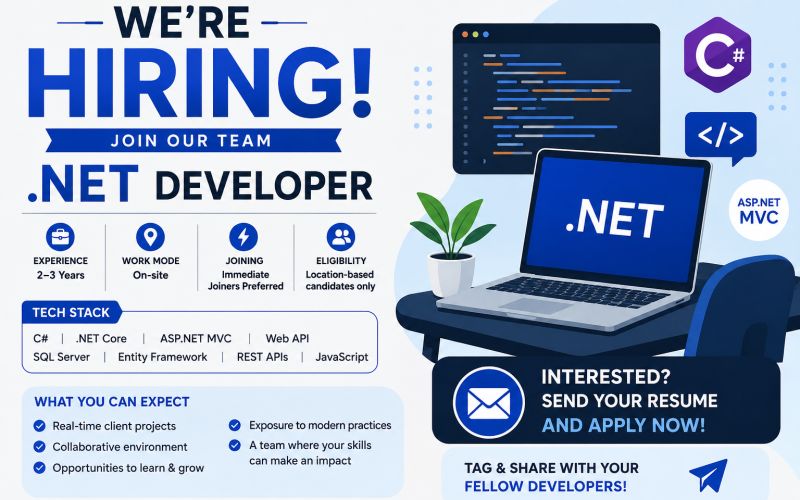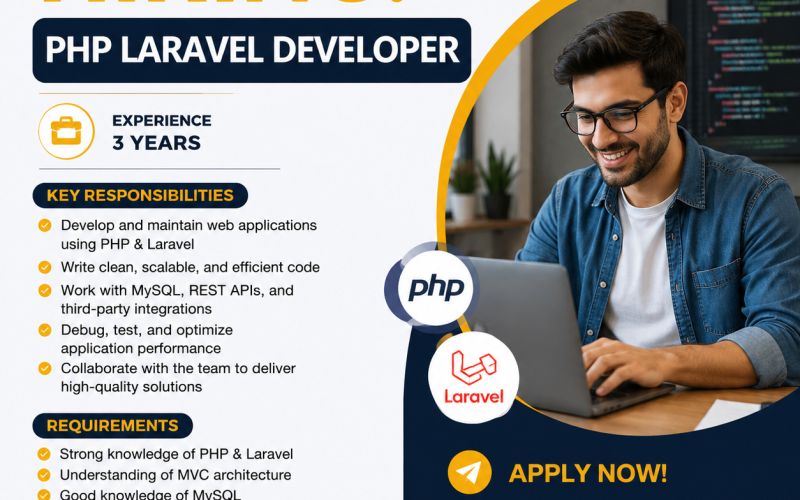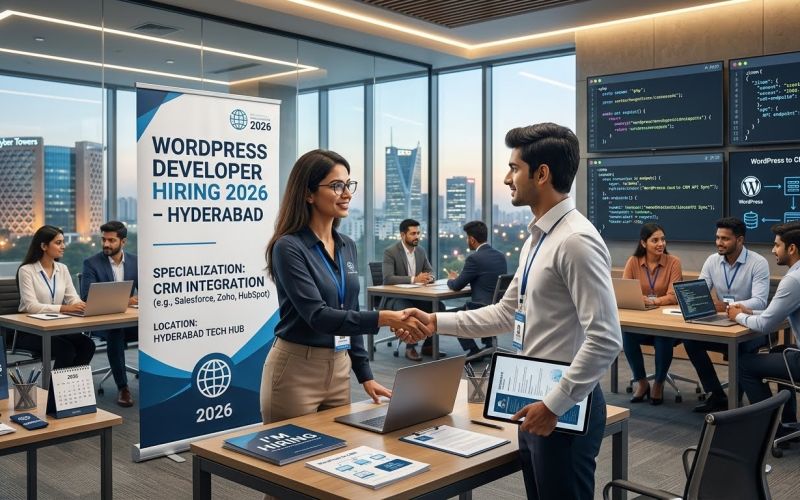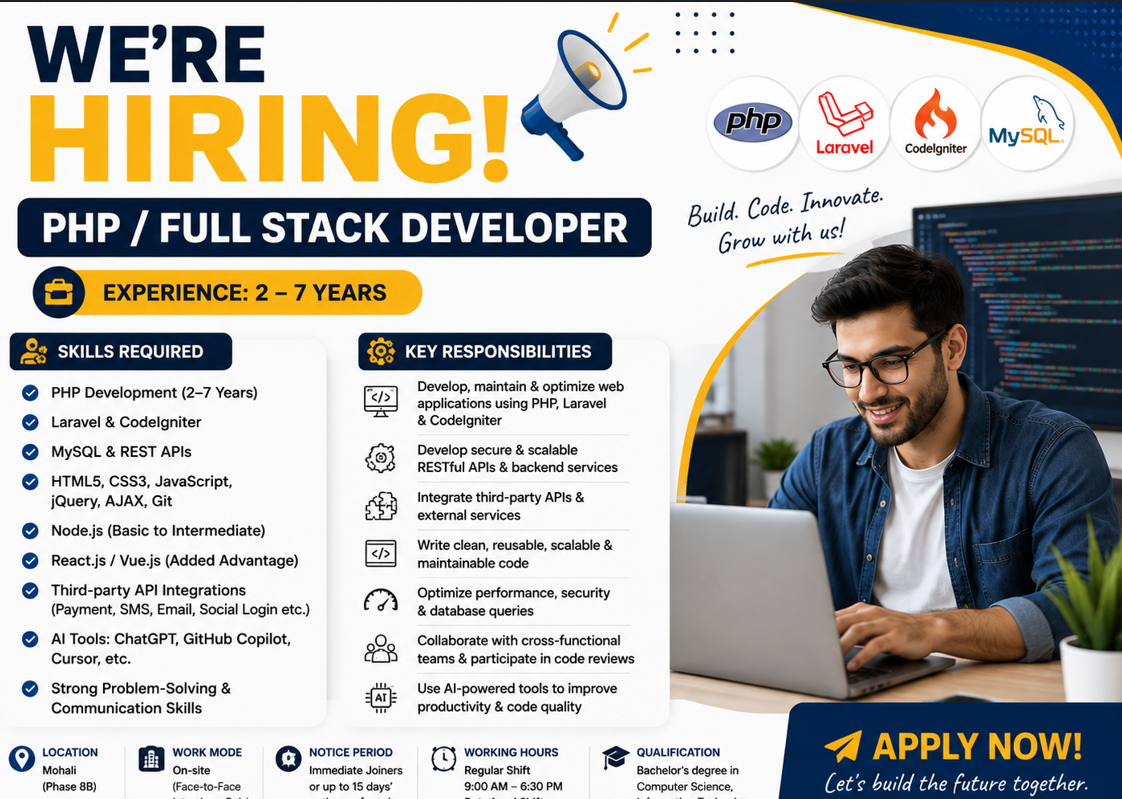
🚀 We're Hiring: PHP Full Stack Developer (Mid to Senior Level)
Are you a versatile web developer who is equally comfortable writing robust backend APIs and designing seamless, interactive user interfaces? Mind2Web is actively searching for a highly skilled, analytical, and driven PHP Full Stack Developer to join our expanding in-house engineering team on-site. This full-stack career opportunity is specifically tailored for developers with 2 to 7 years of professional experience who want to solve complex architectural challenges, manage custom web products, and accelerate their career growth under senior technical mentorship.
Hiring for Mind2Web.
💼 Position Overview:
• Role: PHP Full Stack Developer (Mid to Senior Software Engineer)
• Experience Required: 2 - 7 Years of professional full-stack web development experience
• Job Location: Mohali IT Hub / Chandigarh Area (Complete On-Site / Work From Office)
• Employment Type: Full-Time, Permanent
• Salary Range: ₹5,50,000 - ₹11,20,000 Per Annum (Based on structural code evaluation and experience leveling)
⚙️ Core Roles & Responsibilities:
As a PHP Full Stack Developer at Mind2Web, your daily technical and architectural tasks will include:
• Designing, building, and maintaining high-performance web applications from scratch through the complete development lifecycle.
• Writing clean, maintainable, object-oriented backend code using PHP frameworks like Laravel or CodeIgniter.
• Architecting and optimizing relational database schemas, query indexings, and complex subqueries using MySQL.
• Building, testing, standardizing, and documenting secure RESTful APIs for mobile and frontend integration architectures.
• Developing highly responsive, cross-browser compatible frontend client-side interfaces using modern UI standards.
• Debugging runtime exceptions, troubleshooting script execution bottlenecks, and refactoring legacy architectures to optimize page speeds.
• Collaborating closely with product managers, QA automation units, and DevOps leads to deploy cloud-ready enterprise features.
📌 Technical Skills Required:
Candidates applying for this full-stack engineering role must possess practical experience in:
• Backend Engineering: Strong core fundamentals of PHP alongside practical framework mastery using Laravel or CodeIgniter.
• Database Management: Deep knowledge of relational databases, specifically structural database normalization, indexing, and performance tuning in MySQL.
• Core Frontend Stack: Proficient technical command over HTML5, CSS3, JavaScript rules, Bootstrap frameworks, and responsive grids.
• Interactive Scripting: Robust experience with native JavaScript scripting, jQuery libraries, and asynchronous AJAX integrations.
• Version Control & Deployment: Solid working knowledge of source control workflows using Git branching configurations, GitHub, or Bitbucket.
• Systems Logic: Clear architectural understanding of RESTful API design, MVC software design patterns, and application security mechanisms.
Top 10 Mid-to-Senior PHP Full-Stack Interview Q&As (2–7 Years Experience)
Q1. How do you optimize frontend rendering speeds while lowering backend MySQL database processing overhead?
Ans. Full-stack optimization requires a two-pronged strategy. On the frontend, implement asset minification, utilize tree-shaking, and leverage browser caching configurations via .htaccess or Nginx. On the backend, prevent the 'N+1 query problem' inside Eloquent loops by implementing Eager Loading with the with() method, and cache heavy configuration datasets inside Redis to completely bypass repeat database cell lookups.
Ans. Full-stack optimization requires a two-pronged strategy. On the frontend, implement asset minification, utilize tree-shaking, and leverage browser caching configurations via .htaccess or Nginx. On the backend, prevent the 'N+1 query problem' inside Eloquent loops by implementing Eager Loading with the with() method, and cache heavy configuration datasets inside Redis to completely bypass repeat database cell lookups.
Q2. What is the operational difference between Single Page Applications (SPA) and Multi-Page Applications (MPA) in PHP web architectures?
Ans. SPAs (built with tools like Vue or React communicating with Laravel APIs) load a single HTML layout shell and dynamically rewrite content inside the view layer via JSON endpoints, providing instantaneous page latency. MPAs execute full server-side processing loops, rendering and transmitting a complete fresh HTML template grid over the network on every individual link redirection.
Ans. SPAs (built with tools like Vue or React communicating with Laravel APIs) load a single HTML layout shell and dynamically rewrite content inside the view layer via JSON endpoints, providing instantaneous page latency. MPAs execute full server-side processing loops, rendering and transmitting a complete fresh HTML template grid over the network on every individual link redirection.
Q3. How do you implement robust, secure cross-origin resource access constraints on PHP backend RESTful APIs?
Ans. Cross-Origin Resource Sharing (CORS) is managed by configuring explicit server-side response headers or injecting custom middleware into the global routing pipeline. The system validates incoming HTTP requests against authorized domain strings, allowed HTTP verbs (GET, POST, PUT, DELETE), and secure Authorization tokens to prevent unauthorized third-party automated request exploitation.
Ans. Cross-Origin Resource Sharing (CORS) is managed by configuring explicit server-side response headers or injecting custom middleware into the global routing pipeline. The system validates incoming HTTP requests against authorized domain strings, allowed HTTP verbs (GET, POST, PUT, DELETE), and secure Authorization tokens to prevent unauthorized third-party automated request exploitation.
Q4. Explain how asynchronous AJAX data lookups handle background communication cycles without triggering layout reload drops.
Ans. Asynchronous JavaScript and XML (AJAX) issues non-blocking network calls using native fetch() or Axios wrappers pointing to API routes. The primary browser rendering engine yields the thread handle cleanly back to user operations while background server scripts execute, parsing the returned JSON data array dynamically via client-side scripts to update specific DOM elements without forcing a full page refresh.
Ans. Asynchronous JavaScript and XML (AJAX) issues non-blocking network calls using native fetch() or Axios wrappers pointing to API routes. The primary browser rendering engine yields the thread handle cleanly back to user operations while background server scripts execute, parsing the returned JSON data array dynamically via client-side scripts to update specific DOM elements without forcing a full page refresh.
Q5. How do you prevent Cross-Site Scripting (XSS) and SQL Injection security threats concurrently inside a custom full-stack application?
Ans. SQL Injection is blocked by utilizing parameterized Prepared Statements via PDO wrappers, isolating query logic from raw user variables. XSS attacks are mitigated on the frontend by passing all active string variables through template auto-escaping engines (like Blade's {{ $variable }} syntax) or applying strict htmlspecialchars() data sanitation filters before printing datasets into client visual layers.
Ans. SQL Injection is blocked by utilizing parameterized Prepared Statements via PDO wrappers, isolating query logic from raw user variables. XSS attacks are mitigated on the frontend by passing all active string variables through template auto-escaping engines (like Blade's {{ $variable }} syntax) or applying strict htmlspecialchars() data sanitation filters before printing datasets into client visual layers.
Q6. What problem do Laravel Database Queues solve, and how do you handle asymmetric heavy file processing workloads asynchronously?
Ans. Queues offload time-intensive computing processing tasks (such as bulk invoice compiling or image resizing) out of the primary synchronous HTTP thread execution loop. These workloads are moved into localized queue drivers where background worker processes complete tasks sequentially, reducing front-end transaction latency and preventing application timeouts.
Ans. Queues offload time-intensive computing processing tasks (such as bulk invoice compiling or image resizing) out of the primary synchronous HTTP thread execution loop. These workloads are moved into localized queue drivers where background worker processes complete tasks sequentially, reducing front-end transaction latency and preventing application timeouts.
Q7. Explain the operational difference between localStorage, sessionStorage, and HTTP Cookies inside browser clients.
Ans. localStorage stores data strings continuously across sessions with no automatic expiration window. sessionStorage isolates data to a single specific browser tab lifecycle, clearing variables upon closure. HTTP Cookies possess rigid custom size limitations (4KB), are transmitted automatically to backend servers inside every network header block, and can be secured using HttpOnly flags to block malicious script scanning.
Ans. localStorage stores data strings continuously across sessions with no automatic expiration window. sessionStorage isolates data to a single specific browser tab lifecycle, clearing variables upon closure. HTTP Cookies possess rigid custom size limitations (4KB), are transmitted automatically to backend servers inside every network header block, and can be secured using HttpOnly flags to block malicious script scanning.
Q8. What are Service Providers inside Laravel, and how do they boot up backend full-stack dependencies?
Ans. Service Providers are the central bootstrap mechanism of the framework architecture. The system iterates through provider configurations sequentially during initialization to register service scopes, boot up route parameters, map custom blade directives, and bind abstract interfaces inside the Service Container before processing incoming client-side HTTP request loops.
Ans. Service Providers are the central bootstrap mechanism of the framework architecture. The system iterates through provider configurations sequentially during initialization to register service scopes, boot up route parameters, map custom blade directives, and bind abstract interfaces inside the Service Container before processing incoming client-side HTTP request loops.
Q9. How do you implement automated rate-limiting constraints on secure user login forms to prevent brute-force security exploitation?
Ans. Rate limiting is enforced on routes by invoking native throttle middleware components. The system monitors unique client identifiers (such as tracking user IP addresses or email hashes) and evaluates request thresholds. If a malicious client hits maximum boundaries within a time window, the system automatically triggers a 429 Too Many Requests response payload.
Ans. Rate limiting is enforced on routes by invoking native throttle middleware components. The system monitors unique client identifiers (such as tracking user IP addresses or email hashes) and evaluates request thresholds. If a malicious client hits maximum boundaries within a time window, the system automatically triggers a 429 Too Many Requests response payload.
Q10. How does the automated CSRF token verification process intercept cross-site request forgery attacks?
Ans. The global VerifyCsrfToken middleware chain tracks all incoming POST, PUT, and DELETE HTTP verbs. It parses incoming header parameters or hidden form input elements to match encrypted payload tokens against the current verified user session state, automatically blocking unauthorized third-party automated request manipulation.
Ans. The global VerifyCsrfToken middleware chain tracks all incoming POST, PUT, and DELETE HTTP verbs. It parses incoming header parameters or hidden form input elements to match encrypted payload tokens against the current verified user session state, automatically blocking unauthorized third-party automated request manipulation.
📋 Selection & Interview Process:
• Phase 1: CV Screening – Evaluation based on production tech stack match and live application full-stack portfolio structures.
• Phase 2: Machine Coding Test – A time-bound practical machine coding assignment evaluating database schema validation, clean MVC routing, and raw full-stack logic loops.
• Phase 3: Technical Interview Panel Deep Dive – An intricate face-to-face evaluation covering object-oriented programming (OOPs), frontend latency optimization, API security protocols, and relational data loops.
• Phase 4: HR & Structuring Round – Final strategic conversation focusing on physical office schedule compliance, notice period confirmations, role leveling (Mid vs Senior), and formal offer structuring.
🎁 Perks & Benefits:
• Accelerated Growth: Regular performance-based reviews and rapid career progression paths for self-driven engineers.
• Skill Enrichment: Work directly on complex multi-tenant enterprise integration platforms using modern deployment pipelines.
• Vibrant Tech Environment: Work within a welcoming, highly supportive, collaborative, and technically progressive physical corporate office workspace.
📩 How to Apply:
Know a talented web developer with strong backend and frontend skills who is looking for a career upgrade? Share this premium full-stack opportunity with them!